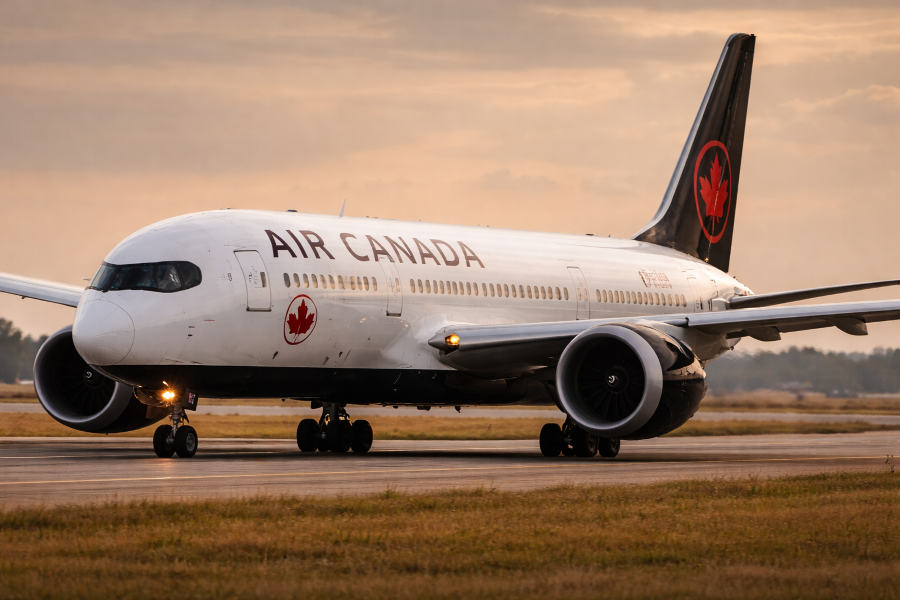
An Air Canada Express jet collided with a Port Authority fire‑rescue vehicle while landing at New York’s LaGuardia Airport late Sunday night, resulting in the deaths of both pilots and injuries to dozens of passengers and emergency personnel.
The aircraft, operating as Flight AC8646 from Montréal and flown by Jazz Aviation on behalf of Air Canada, was carrying 72 passengers and four crew members when the collision occurred at approximately 11:40 p.m. on Runway 4.
Authorities reported that the fire‑rescue vehicle was responding to a separate incident involving a United Airlines aircraft that had reported an odor in the cabin when it crossed the runway ahead of the landing Air Canada jet.
Air traffic control audio reviewed by investigators captured a controller instructing the truck to stop moments before impact, followed by a statement in which the controller appeared to acknowledge an error, saying, “I messed up.”
Both the FAA and the NTSB have confirmed that air traffic control staffing and communication at the time of the crash will be part of the investigation.
A total of 41 people were transported to hospitals following the collision, including 39 passengers from the aircraft and two Port Authority officers who were inside the fire‑rescue truck.
Officials noted that most injuries were minor, though several individuals remained under observation.
The Port Authority stated that the fire‑rescue personnel suffered broken limbs but were in stable condition.
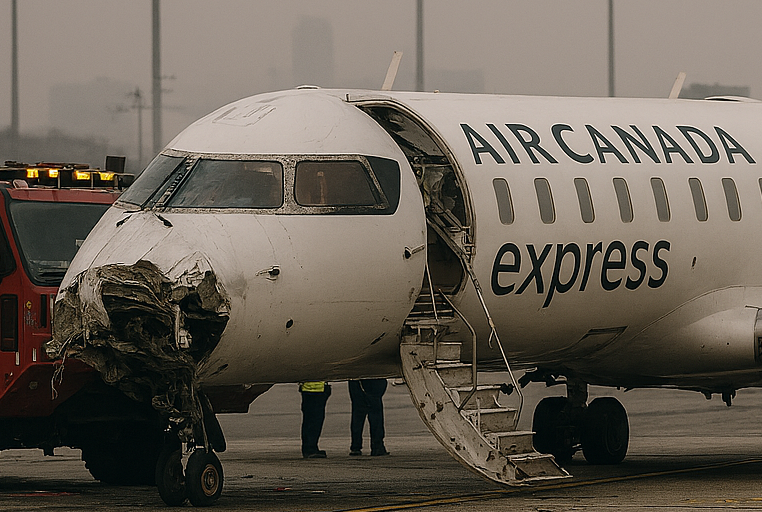
The aircraft was traveling at an estimated 24 to 28 miles per hour during the landing roll when it struck the emergency vehicle, causing significant structural damage to the forward fuselage.
LaGuardia Airport suspended all operations immediately after the incident, leading to widespread cancellations and delays visible on terminal departure boards throughout the morning.
Officials confirmed the airport would remain closed until at least early Monday afternoon to allow investigators and cleanup crews full access to the crash site.
Air Canada issued a statement expressing condolences for the loss of the two pilots and confirming that its teams were coordinating with emergency responders and providing support to passengers and families.
The airline also noted that it is cooperating fully with the Transportation Safety Board of Canada and the U.S. National Transportation Safety Board as the investigation progresses.
Authorities continue to review communications between the control tower and ground units, as well as the sequence of events leading up to the collision.
Preliminary assessments suggest that multiple factors, including the overlapping emergency response to the United Airlines aircraft and decisions made by air traffic control, will be examined. Investigators have emphasized that detailed findings will be released after further analysis of recordings, radar data, vehicle movements, and crew actions.
The damaged aircraft remained on the runway through Monday morning as recovery crews assessed how to safely remove it without disrupting ongoing investigative work.
Images from the airport showed the jet resting at an angle with debris hanging from the forward fuselage and emergency vehicles positioned nearby.
The crash marks one of the most serious ground incidents at a major U.S. airport in recent years and has renewed attention on runway safety protocols and staffing challenges within the nation’s air traffic control system.